What is shared-container shipping?
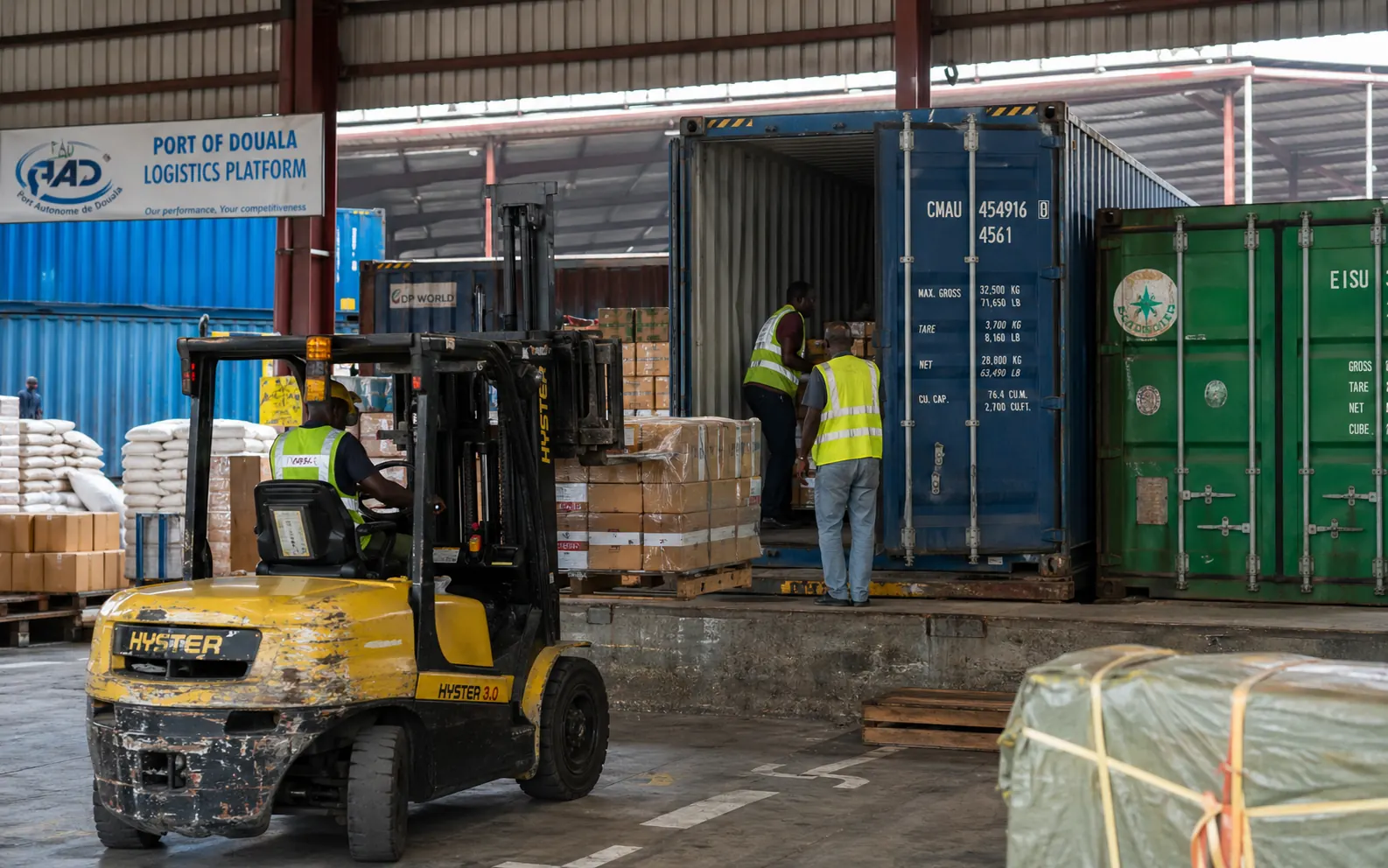
Shared-container shipping groups goods from several shippers in one maritime container. Each shipper pays only for the volume or weight they use, significantly reducing freight cost compared to a full container load (FCL). At the destination port, the container is deconsolidated and each lot is released to its consignee.
- Pro-rata payment for space used, without full-container charges
- Regular departures even for modest or seasonal volumes
- Shared handling, transport and customs clearance costs
How ALC Transit consolidates your goods
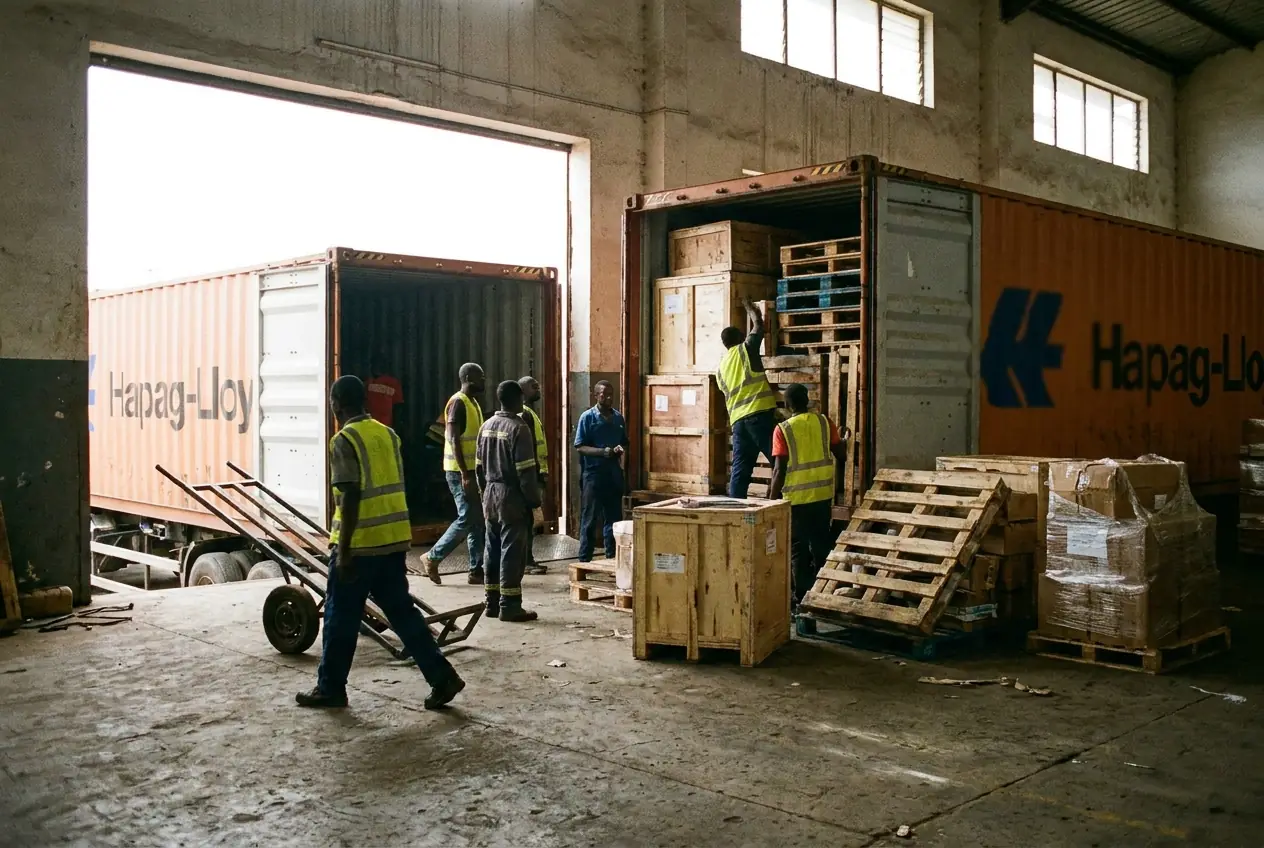
Our consolidation process is designed to ensure the security, traceability and compliance of every shipment. From warehouse receipt to final delivery, our teams rigorously coordinate each step.
1. Goods receipt and inspection
Your parcels or pallets arrive at our consolidation warehouse or at a partner facility. We check the condition of goods, packing, labelling and document compliance before inclusion in the consolidation.
- Visual inspection and weighing/measurement of each lot
- Verification of commercial documents (invoice, packing list)
- Immediate reporting of any anomaly before consolidation
2. Consolidation and container preparation
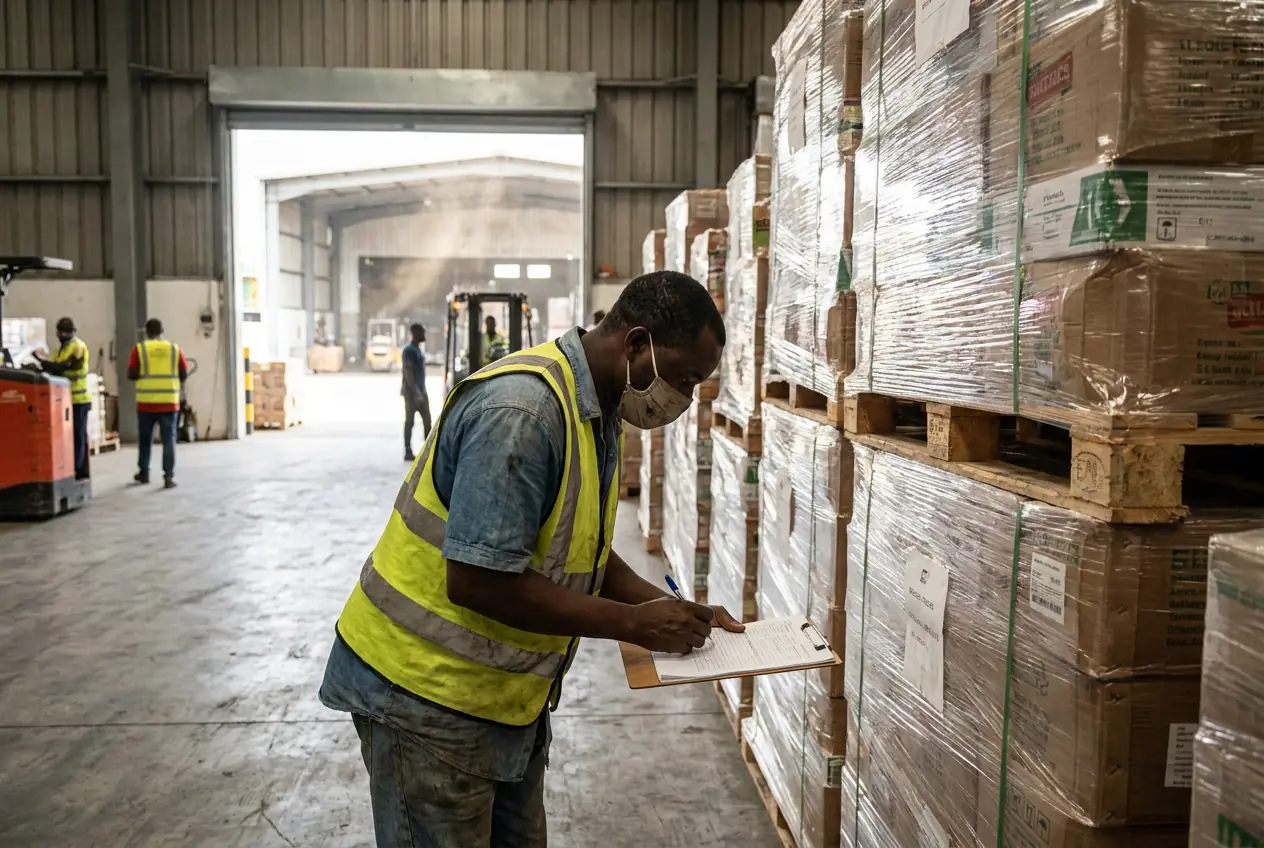
Compatible goods are grouped in the container according to an optimised stowage plan. We ensure load stability, protection of fragile parcels and compliance with maritime safety rules.
- Optimised stowage plan to maximise space and safety
- Separation of incompatible goods (food, chemicals, etc.)
- Container sealing and consolidation manifest issuance
3. Export formalities and loading
ALC Transit or our NVOCC partners handle export customs formalities, space booking with the shipping line and embarkation tracking. Each shipper receives a tracking number linked to the container.
- Export declaration and required authorisations
- Space booking and coordination with the port terminal
- Loading notification and LCL bill of lading issuance
4. Tracking, deconsolidation and delivery
On arrival at the Port of Douala or Kribi, we coordinate deconsolidation, clearance of your lot and delivery to your warehouse, shop or depot. You are notified at every key stage.
- At-sea container tracking and arrival notification
- Import clearance and secure deconsolidation at terminal
- Door-to-door delivery or warehouse release
Benefits of LCL ocean consolidation
LCL ocean consolidation lets SMEs, traders and occasional importers access international transport without investing in a full container. It is especially suited to low- to medium-volume goods, regular but modest shipments, or seasonal products.
With ALC Transit, you have a single point of contact coordinating consolidation, customs formalities and final delivery for a clear, controlled operation.
- Significant freight cost reduction compared to FCL
- Flexibility: ship according to your needs without waiting to fill a container
- Access to the same shipping lines and hubs as large importers
- Clearance and delivery integrated in full end-to-end support
Standard consolidation
Our standard consolidation service is for regular small and medium-volume shipments to or from Cameroon. You benefit from scheduled departures, per m³ or per-tonne rates and straightforward tracking throughout the journey.
Ideal for traders, SMEs and importers shipping several times a month without reaching full-container volume.
Personalised consolidation
For specific goods — fragile, sensitive, temperature-controlled or subject to special permits — we tailor consolidation to your constraints. Our teams review your file to propose bespoke packing, routing and scheduling.
This service suits industrial clients and importers of spare parts, equipment or products requiring special attention at every logistics stage.
NVOCC co-consolidation
Through partnerships with NVOCCs (Non-Vessel Operating Common Carriers), ALC Transit accesses an international consolidation network. We can group your goods with those of other shippers on major trade lanes: Europe–Africa, Asia–Africa, intra-CEMAC.
This co-consolidation model ensures frequent departures, competitive rates and full visibility on your cargo movement, even when you ship only a few pallets.
Regular departures from our strategic hubs
ALC Transit organises regular consolidation departures from and to major logistics hubs. This frequency lets you plan replenishment without unnecessarily tying up cash in stock.
- Cameroon: Douala-Bonabéri and Kribi — receipt, deconsolidation, clearance and nationwide delivery
- Africa: consolidation and transit to the CEMAC zone (Chad, CAR, Congo, Gabon, Equatorial Guinea)
- Europe and Asia: consolidation hubs to Douala and Kribi with weekly or bi-weekly departures
Containers suited to your volumes
Depending on consolidated volume and the nature of your goods, we select the most appropriate container type. Our goal is to optimise space, protect your cargo and control the overall cost of the operation.
For LCL shipments, billing is usually by weight/measure (W/M — weight or measurement), whichever is more favourable to the carrier. ALC Transit helps you estimate this ratio before shipping to avoid surprises.
- 20' container (33 m³): ideal for compact consolidations and dense cargo
- 40' container (67 m³): optimised volume for medium to large consolidations
- 40' HC container (76 m³): extra height for bulky but light goods