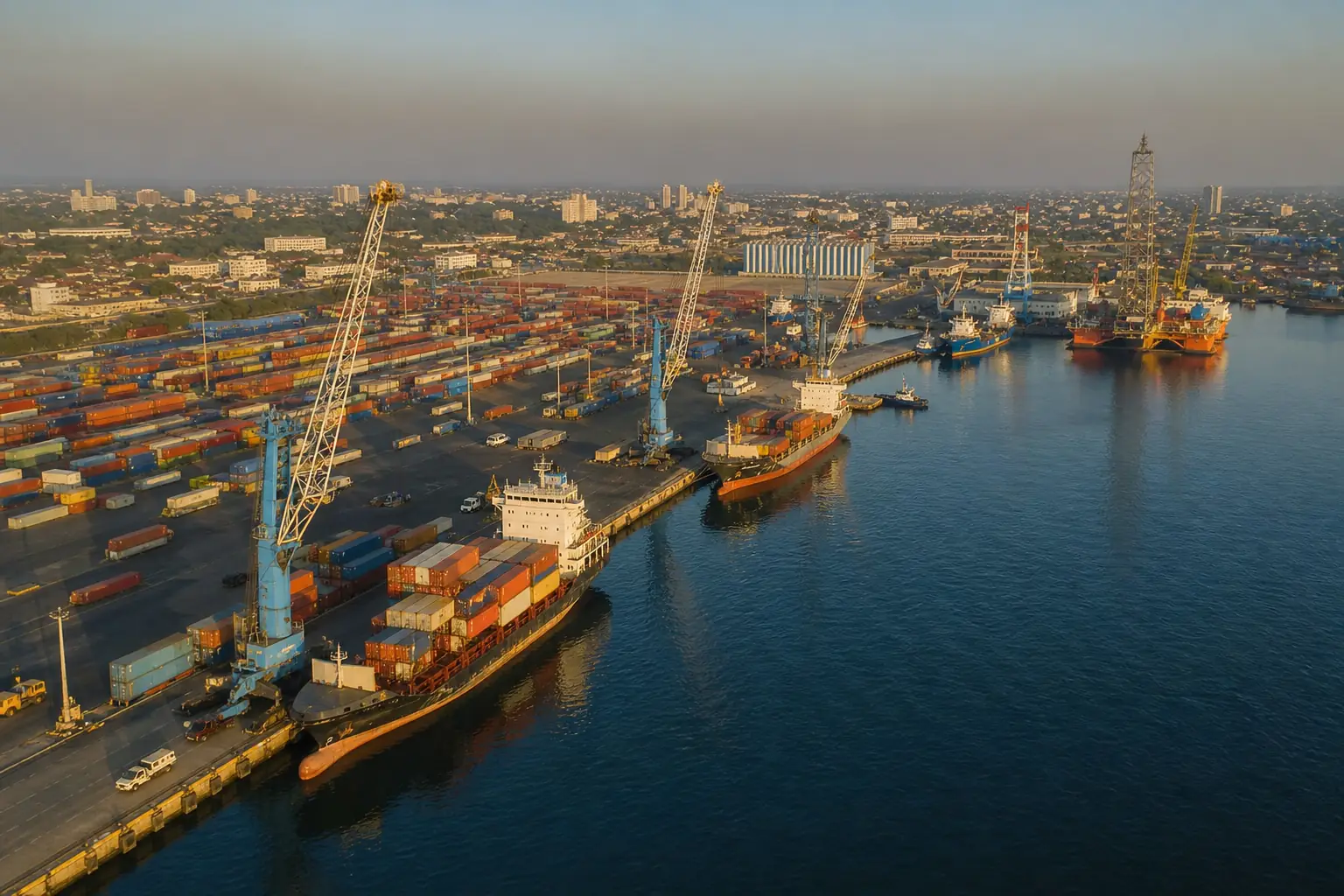
The Economic and Monetary Community of Central Africa, better known as CEMAC, brings together six states: Cameroon, Congo, Gabon, Equatorial Guinea, the Central African Republic and Chad. With its coastline on the Gulf of Guinea, the region has several port infrastructures essential to maritime transport, international trade and the supply of landlocked countries.
But how many ports actually exist in the CEMAC zone? The answer depends on how they are counted. A distinction is needed between major commercial seaports, secondary ports, oil terminals, river ports, fishing ports and inland logistics platforms.
Counting only the main commercial seaports, the CEMAC zone has about ten major port sites. That number can be higher when secondary, specialised or river facilities are included.
Ports, pillars of CEMAC foreign trade
CEMAC ports are the main gateways for goods entering and leaving Central Africa. They receive containers, vehicles, industrial equipment, food products, hydrocarbons, raw materials and many other freight categories.
Their importance extends well beyond the borders of coastal countries. Chad and the Central African Republic have no direct access to the sea. A large share of their imports and exports must therefore transit through the port infrastructures of neighbouring countries, then use road, rail or river corridors.
For an importing or exporting company, the choice of port directly affects delivery times, handling fees, storage costs, inland haulage and how clearance is organised.
Cameroon: three major regional maritime gateways
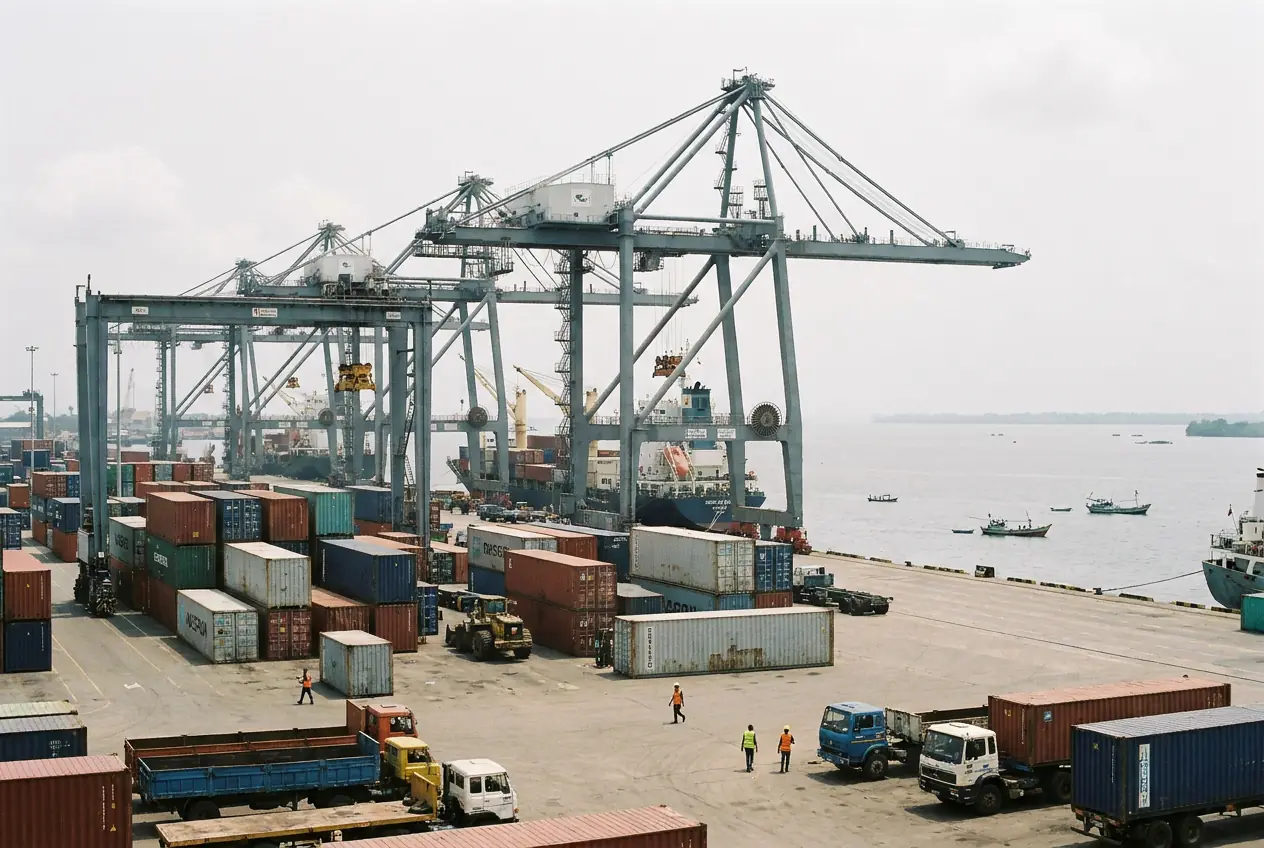
Cameroon occupies a strategic position in sub-regional trade. It has several port infrastructures, including three particularly important maritime sites. Maritime transport at the ports of Douala and Kribi concentrates most of the country's commercial flows.
The port of Douala-Bonaberi
The port of Douala-Bonaberi is a historic infrastructure of Cameroonian and regional trade. Located in Cameroon's economic capital, it handles containers, conventional cargo, vehicles, food products and various types of industrial cargo.
Its connection to road and rail networks also lets it serve inland Cameroon and the corridors leading to Chad and the Central African Republic.
Moving cargo through Douala nevertheless requires sound documentary preparation. An error on the commercial invoice, the declaration, the bill of lading or the customs classification can cause delays, storage fees and extra costs.
The deep-water port of Kribi
The port of Kribi is designed to receive large-capacity vessels. Its draught and modern infrastructure allow it to play a growing role in container transport, transshipment and the movement of industrial goods.
Kribi is an important platform for companies seeking a maritime solution suited to large volumes, heavy equipment or industrial projects. Its development strengthens Cameroon's position as a logistics hub of the Gulf of Guinea.
The port of Limbe
Located in the South-West region, the port of Limbe completes Cameroon's port system. It has significant potential for maritime, industrial and energy activities.
Cameroon also has river and inland infrastructures, such as those at Garoua. They contribute to the regional circulation of goods, but should not be counted as ocean seaports.
Gabon: Owendo, Libreville and Port-Gentil
Gabon has several maritime facilities administered by the Office of Ports and Harbours of Gabon. Three major clusters appear in its port organisation.
The port of Owendo
Located near Libreville, the port of Owendo is one of the country's main commercial platforms. It handles in particular containers, conventional freight, forest products and goods destined for the Gabonese market.
Port facilities in Libreville
Libreville also has port zones used for various maritime, commercial and passenger-transport activities. In some presentations, Libreville and Owendo are associated geographically. They can nevertheless be distinguished in terms of management and operational functions.
The port of Port-Gentil
The port of Port-Gentil plays an essential role in the Gabonese economy, notably because of industrial, oil and maritime activities. It handles cargo transport, local supply and operations linked to the energy sector.
Other sites, such as Mayumba, Mondah or Fernan-Vaz, can be added to a broader inventory. That is why the total number of Gabonese ports varies depending on the sources and the categories retained.
Congo: Pointe-Noire, the sub-region's ocean gateway
The Republic of Congo has one major commercial seaport: the autonomous port of Pointe-Noire.
Thanks to its position on the Atlantic seaboard, Pointe-Noire is a major entry point for Congolese trade and some regional flows. It has in particular a container terminal, logistics zones and specialised facilities.
Congo also has the river port of Brazzaville, linked to the Congo basin. This infrastructure plays an important role in domestic and regional trade, but it belongs to the category of river ports, not seaports.
Equatorial Guinea: Malabo, Bata and Luba
Equatorial Guinea has three main maritime infrastructures.
The port of Malabo, on Bioko island, serves the capital and takes part in the country's commercial exchanges. The port of Bata, on the mainland, facilitates the import and distribution of goods towards the interior. Finally, the port of Luba is particularly linked to industrial, oil and logistics activities.
These three sites strengthen Equatorial Guinea's maritime connectivity and its presence on the commercial routes of the Gulf of Guinea.
Chad and the Central African Republic: countries without a seaport
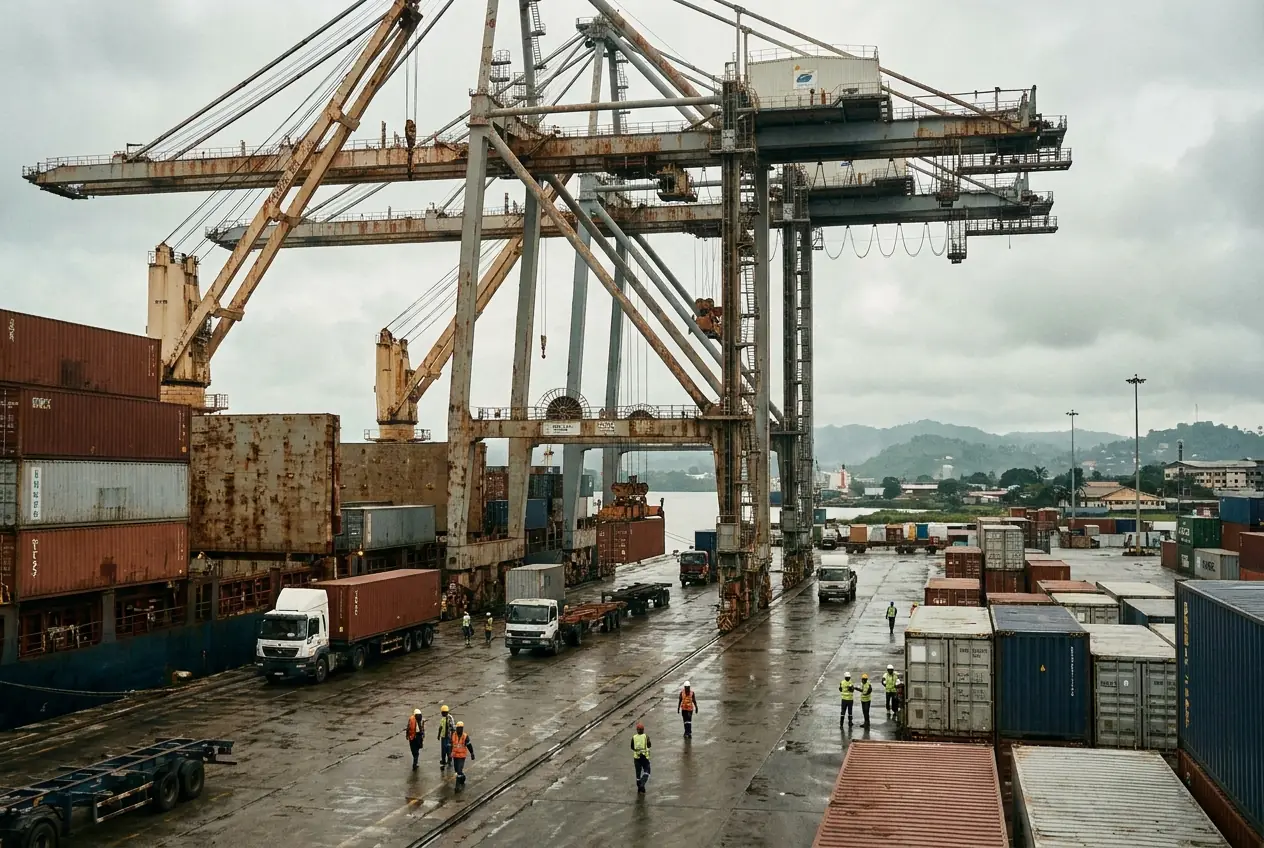
Chad and the Central African Republic are landlocked states. They therefore have no seaport.
Their economic operators depend on international corridors to reach the sea. The corridor linking Douala to N'Djamena is particularly important for Chad, while the Douala-Bangui axis plays a central role in supplying the Central African Republic.
This situation increases the importance of multimodal transport, customs transit and coordination between the administrations of the countries crossed. Cargo destined for Bangui or N'Djamena must generally pass through a seaport, be cleared or placed under a transit regime, then continue by road or rail.
So how many ports does CEMAC have exactly?
Counting the main commercial seaports, the following practical tally can be drawn:
- Cameroon: Douala-Bonaberi, Kribi and Limbe;
- Gabon: Owendo, Libreville and Port-Gentil;
- Congo: Pointe-Noire;
- Equatorial Guinea: Malabo, Bata and Luba;
- Chad: no seaport;
- Central African Republic: no seaport.
This method leads to a total of about ten major maritime port sites in the CEMAC zone.
The figure can exceed ten when secondary ports, oil terminals, mining facilities, fishing ports and river ports are added. It is therefore better to speak of « about ten main commercial seaports » rather than present an absolute number that applies to every categor
y.ALC Transit supports your operations in CEMAC por
s Since 2017, ALC Transit has supported importers, exporters and companies in organising their customs and logistics operations in Cameroon and the CEMAC zon
. Our work can cover documentary analysis, clearance preparation, cargo tracking, port coordination, inland haulage and delivery to the final destinatio
. Choosing a port is not only a matter of comparing distances. The nature of the cargo, the type of container, ocean services, applicable regulations, port dwell times and the inland corridor to be used must also be taken into accoun
. With ALC Transit, you have a counterpart able to turn these constraints into a structured, transparent and controlled operation, from the port of arrival to the final warehous