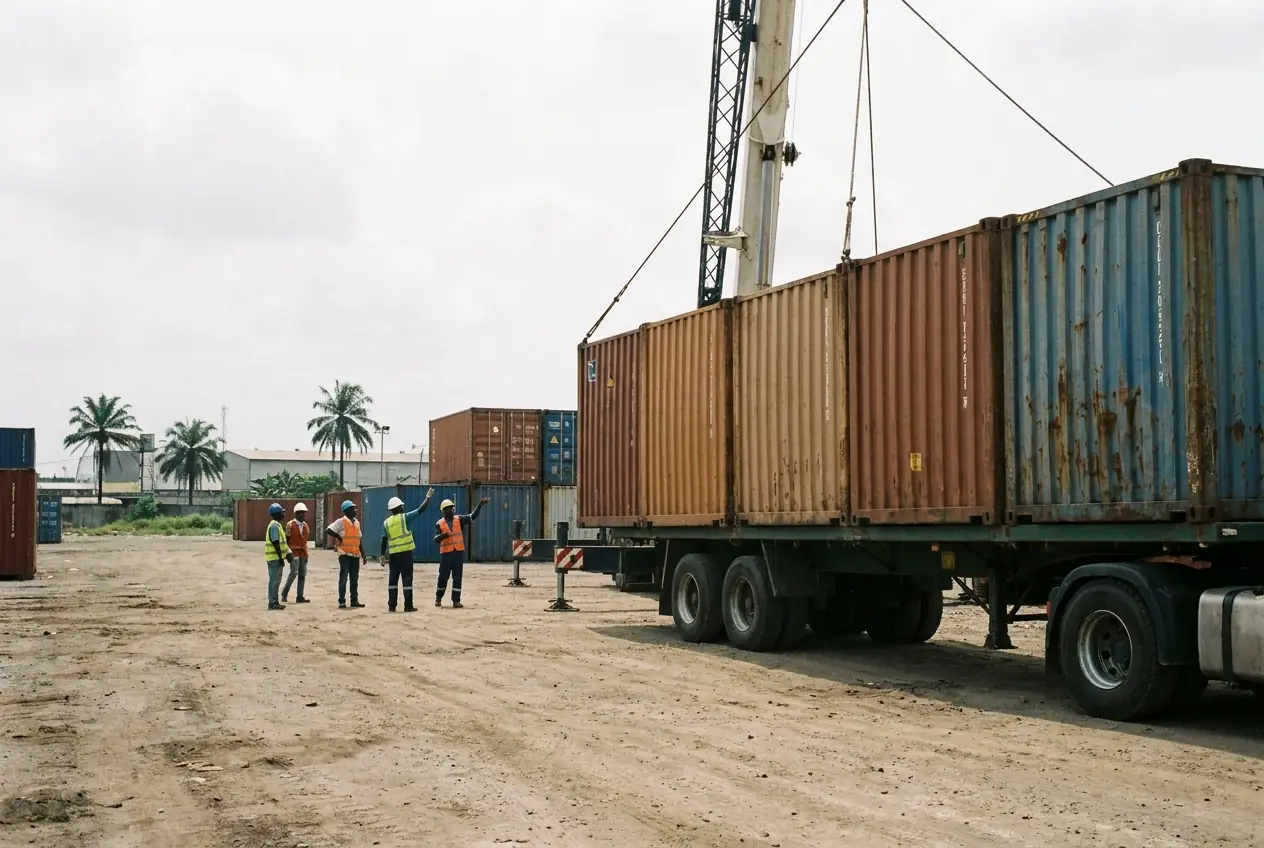
Incoterms determine who (seller / buyer) bears responsibility for transport, insurance and customs formalities at each stage of the supply chain. Picked badly, they create hidden costs and disputes. Here are the most common rules used in Cameroon, and how to decide.
The 4 most-used incoterms for imports into Cameroon
EXW — Ex Works
You collect the goods from the supplier's factory. You pay everything else. Best avoided unless you have very solid logistics at origin.
FOB — Free On Board
The seller loads the goods onto the vessel at the port of origin. You take over from the ship's rail. The most common rule for sea imports to Douala.
CIF — Cost, Insurance and Freight
The seller pays freight and insurance to the port of destination (Douala). You handle customs clearance and onward delivery. Convenient, but seller-arranged insurance is often minimal (110% of value, clause C).
DAP — Delivered At Place
The seller delivers to your door. You only handle customs clearance. More expensive but simple.
Our recommendation
| Importer profile | Recommended incoterm |
|---|---|
| First-time import, little experience | DAP or CIF |
| Regular volume, mature supply chain | FOB |
| Subsidiary of a group with shared logistics | EXW |
The DDP trap
DDP (Delivered Duty Paid) includes customs clearance handled by the seller. Avoid it when the seller has no local structure in Cameroon — they will have to use a local customs broker, whose quality and cost you won't control. DAP plus local customs clearance through your trusted broker is a better choice.
Ask us for an opinion on your incoterm →