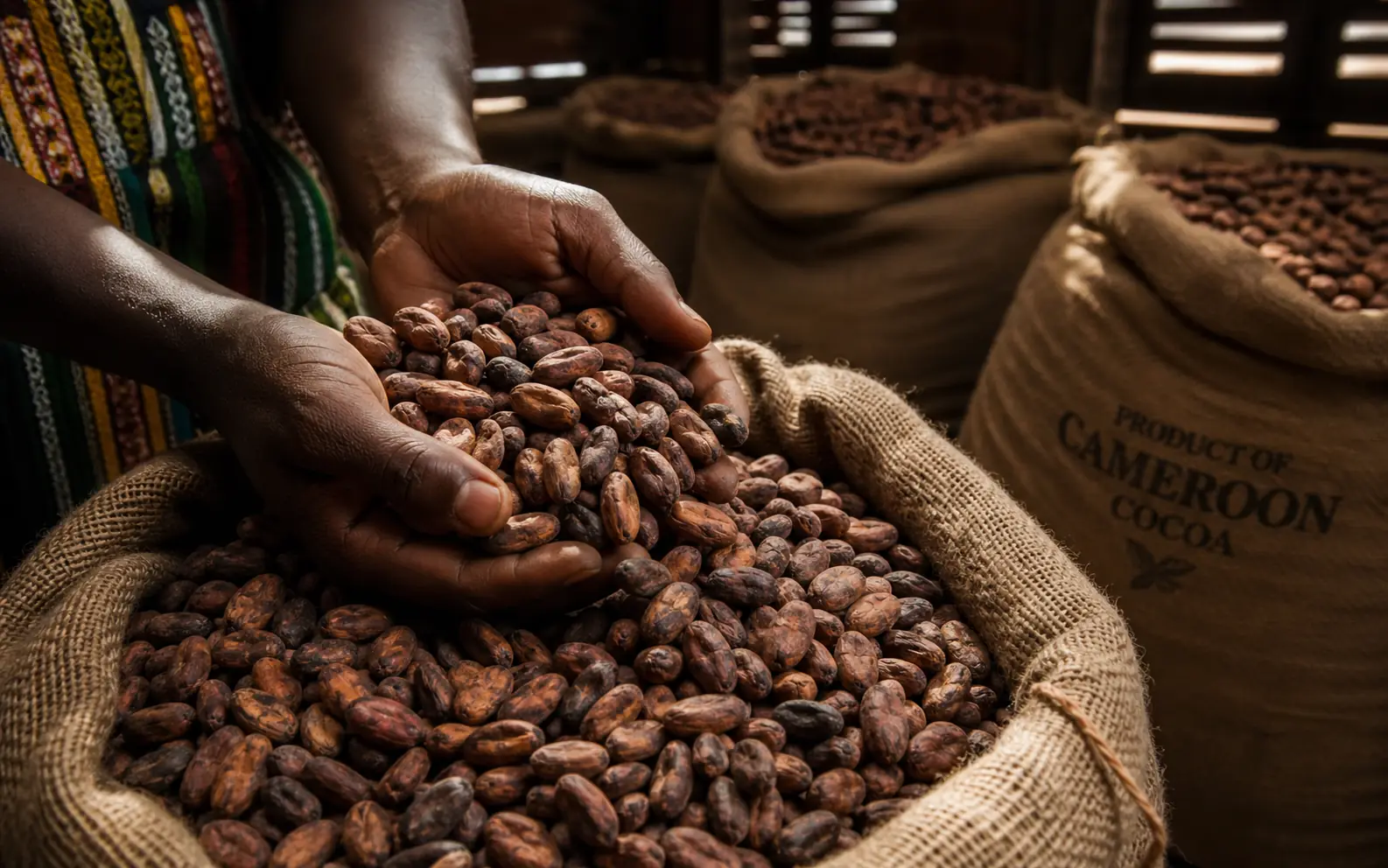
In 2025, a cocoa trader based in Cameroon's Centre region contacted us to structure their first regular export route to Europe. Here is how we built the solution, and the lessons learned.
The context
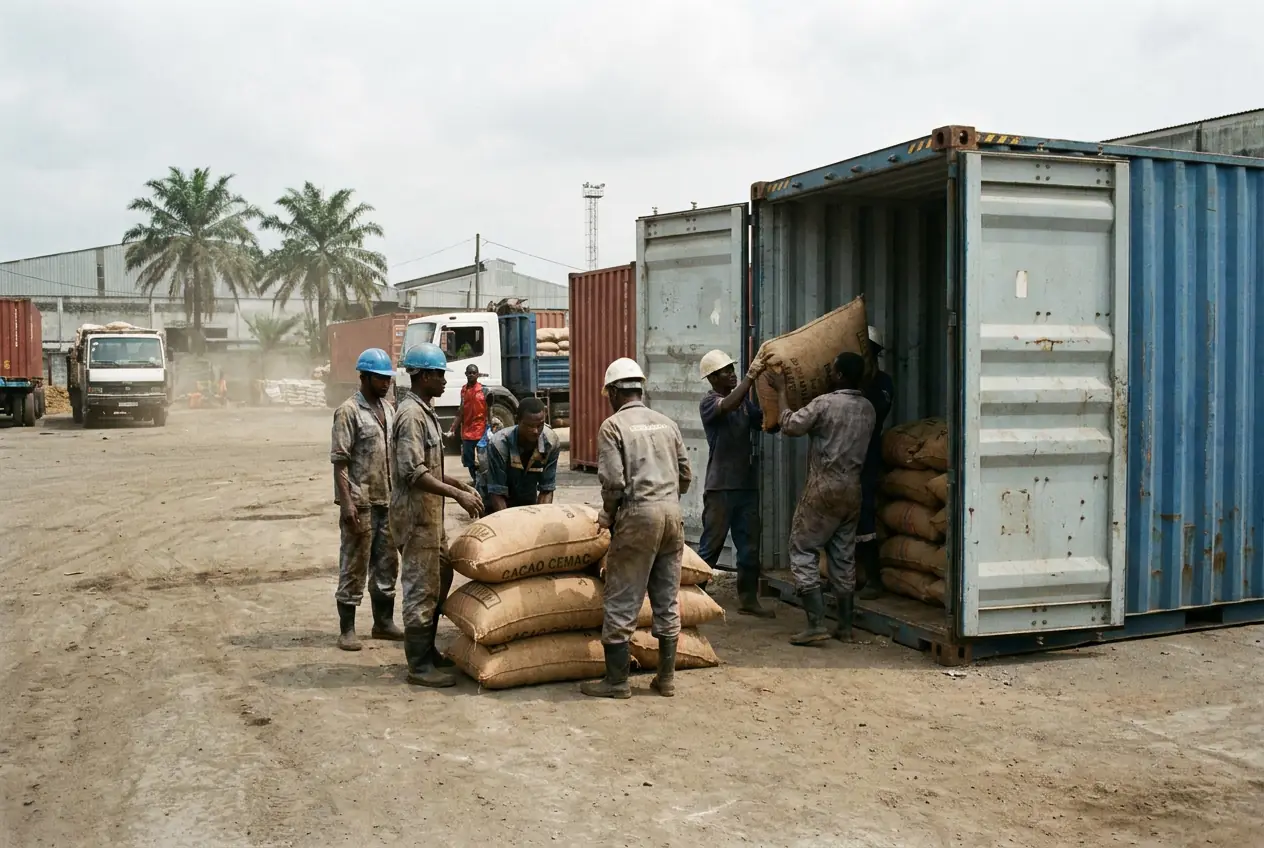
- Volume: 2 × 20' containers per month of cocoa beans in jute bags.
- Destination: port of Antwerp (Belgium), then onwards to a partner roaster.
- Constraints: phytosanitary certification, origin traceability, tight harvest window.
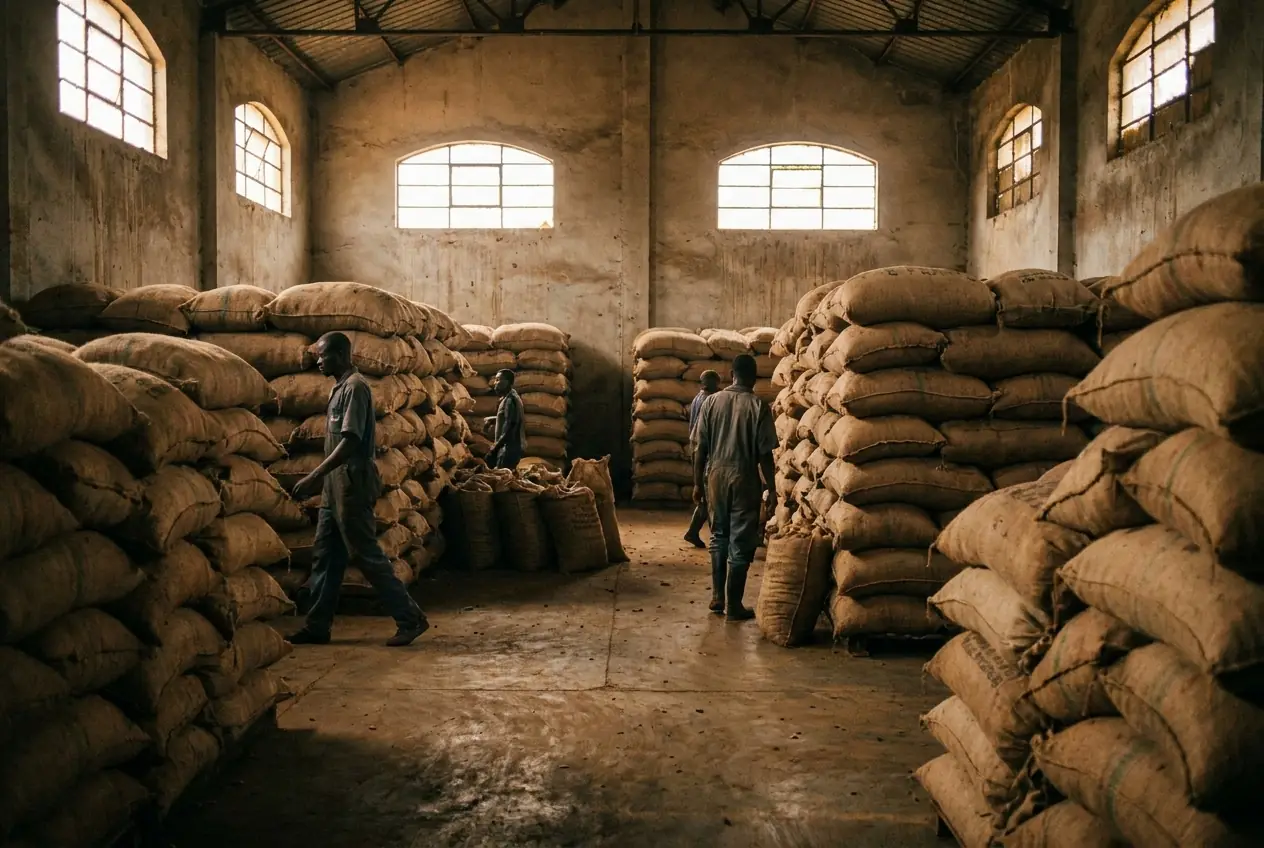
The challenge
The client had never exported directly — they used to sell to a local intermediary. Their key concerns: origin traceability (an EU requirement since the 2024 deforestation regulation), the quality of drying, and management of phytosanitary certificates issued by the ONCC.
Our approach
- Audit of the existing flow: bags, drying, storage, upstream documentation.
- Setting up a traceability protocol: plot geolocation, purchase ledger, numbered batches.
- Coordination with the ONCC for phytosanitary and conformity certificates.
- Consolidation of the two containers into a single monthly departure, with customs clearance in transit.
- Voyage tracking and release in Antwerp through our local partner.
The results
- Overall lead time: 28 days from departure in Centre Cameroon to arrival at the roaster — down from 45 with the previous flow.
- Unit cost: -18% thanks to consolidation and removal of the intermediary.
- Compliance: 100% of batches passed inspections on arrival, no rejections.
What we take away
For sensitive export sectors (cocoa, coffee, banana), documented traceability is now as strategic as product quality. Without it, access to EU markets becomes uncertain.
Do you export, or are you considering it? Let's talk.